You’re working on an urgent project, a client’s waiting, and just as you hit save bam the power goes out. Again. Your laptop’s battery dips below 10%, and you start scrambling for a charger or power bank that either doesn’t work, charges too slowly, or isn’t even compatible. Sound familiar? That’s how you will know the importance of having the best laptop chargers & power banks in Kenya.
In Kenya, where frequent power outages, unreliable sockets, and counterfeit accessories are all too common, having the wrong laptop charger or power bank is more than just inconvenient it’s a risk to your productivity and even your machine’s health. Many people unknowingly use power banks or chargers that overheat, underdeliver, or slowly damage their batteries over time. Worse? Most online “recommendations” are generic, outdated, or biased toward big brands without testing for local conditions.
That’s why we created this guide to cut through the fluff and give you the real answers. Whether you’re a student on a budget, a remote worker needing backup power, or a techie looking for fast-charging, laptop-safe accessories, this article shows you exactly what to buy, how to choose it, and how to avoid the common traps.
Let’s dive into the best chargers and power banks for laptops in Kenya backed by real user experiences, technical comparisons, and local availability.
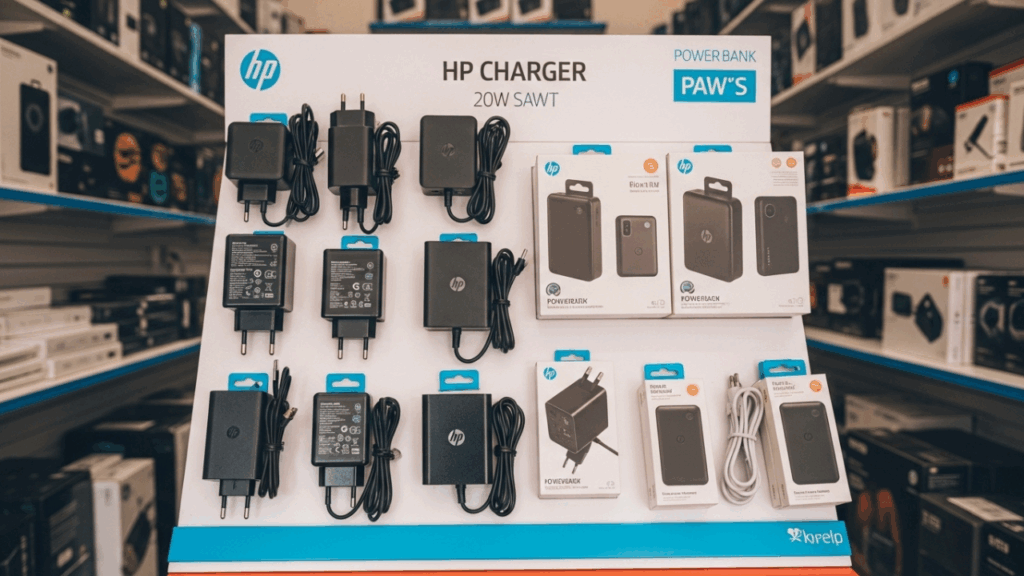
Do You Even Need The Best Laptop Chargers & Power Banks in Kenya?
Laptops are built for mobility — but power isn’t always guaranteed, especially in Kenya where blackouts, unstable power grids, and forgotten chargers are a reality. You may have asked yourself:
-
“Can’t I just plug in when I need it?”
-
“Isn’t a universal charger good enough?”
Let’s break it down.
Why Many Laptop Users Actually Need The Best Laptop Chargers & Power Banks in Kenya

Unstable Electricity = Charger Killers
Kenyan power surges and brownouts can damage original chargers, fry batteries, or worse — lead to costly motherboard failures. Quality replacements matter.
Laptop Power Banks = Emergency Productivity
Whether you’re a student on a bus to campus or a remote worker in a café with unreliable sockets, a power bank can literally save your day. Especially when power goes off mid-Zoom call.
New Laptops Don’t Always Include the Best Charger
Some newer laptops (especially Type-C models) are shipped with lower-wattage chargers to cut costs. That means slower charging or even no charging during use
Ask Yourself:
-
Does your charger overheat?
-
Is it painfully slow?
-
Does it randomly disconnect or spark at the socket?
-
Do you travel often or work in areas with power cuts?
If you answered “yes” to even one, it’s time to invest in a reliable laptop charger or a high-capacity power bank. Real users hasd the following to say:
“My HP charger blew up twice thanks to KPLC. I switched to a Baseus 65W GAN charger, and I haven’t looked back.”
“As a student in Eldoret, I bought a 20,000mAh Romoss power bank that has a Type-C PD output. It gives me a full MacBook charge when there’s a blackout. Best decision ever.”
You don’t need to wait until your laptop dies mid-task. A great charger and power bank are no longer luxuries they’re essential tools for any laptop user in Kenya who values uptime, productivity, and peace of mind.
What Makes The Best Laptop Chargers or Power Banks In Kenya?

Anyone can sell you a “charger.” But not every charger (or power bank) is safe, compatible, or worth your money — especially in Kenya’s booming third-party accessory market.
So what should you look for before buying?
For Laptop Chargers — Look for These 6 Must-Have Qualities:
1. Correct Wattage for Your Laptop
-
Too low? It won’t charge while in use.
-
Too high? Could damage older models.
Pro Tip: Check your original charger for output (e.g., 65W, 90W). Always match or slightly exceed it.
2. Right Voltage & Amp Rating
Mismatch = overheating, flickering screen, or battery drain.
Always confirm if it’s 19V 3.42A, 20V 2.25A, etc.
3. Safe Plug Head & Fuse Protection
Avoid knockoffs. Go for surge-protected plugs (especially if you’re in Kenya’s urban zones).
4. Port Type (Barrel vs USB-C)
Newer laptops use USB-C PD (Power Delivery) — better, faster, more universal.
5. Brand Reputation & Reviews
Stick with Baseus, Anker, HP Original, Dell Original, UGREEN, Aukey — these brands consistently rate well among Kenyan tech users.
6. Warranty or Local Support
Many quality sellers (especially on Jumia or official stores) offer 6–12 month warranties. That’s a sign they trust their own product.
For Power Banks These Are Non-Negotiable:
1. USB-C PD Output with At Least 45W–65W
Not every power bank can charge a laptop — only those with Power Delivery (PD) above 45W can handle most models.
Tip: MacBook Airs, Ultrabooks can manage with 30W–45W.
Gaming or high-performance laptops? Go for 65W–100W.
2. Capacity: 20,000mAh Minimum
-
10,000mAh = Barely one charge
-
20,000mAh = Safe standard
-
30,000mAh = Ideal for long trips or heavy use
Good models: Romoss, Xiaomi, Baseus, Anker, Oraimo
3. Number of Output Ports & Fast Charging Support
Choose ones with dual PD output, especially if you want to charge your phone + laptop at once.
4. Weight vs Portability
Big = more power, but heavier. Some users prefer 20,000mAh as a sweet spot between power and portability.
What Kenyans Are Saying (Quora / Reddit Insight)
“I bought a 30,000mAh Oraimo power bank and realized it doesn’t do Power Delivery. It only charged my phone, not my Lenovo ThinkPad. I had to switch to a Baseus PD 65W instead.” — Tech buyer, Nairobi
“Avoid those generic white chargers sold on Tom Mboya Street. They work for a week then fry your machine.” — Reddit user from Nairobi CBD
How do I know if a charger is compatible with my laptop?
You have to do the following:
-
Match voltage, wattage, plug type, and polarity.
-
Use manufacturer recommendations or cross-check your laptop model online.
-
If your laptop uses USB-C PD, avoid barrel chargers unless you’re sure.
Best Laptop Charger Brands in Kenya (And What to Avoid)
Not all chargers are created equal and the Kenyan market is flooded with counterfeits and sub-par clones. Below is a carefully curated breakdown of top brands you can trust, and the ones you need to avoid like a bad boda.
Top Trusted Laptop Charger Brands in Kenya
These brands are known for quality, safety, and true compatibility with laptops sold locally:
1. HP Original Chargers
-
Best for: HP EliteBooks, ProBooks, Pavilions
-
Safety: High — Includes surge protection
-
Note: Always confirm it’s not “HP Compatible” (which usually means fake)
2. Dell Genuine Chargers
-
Best for: Dell Latitude, XPS, Inspiron
-
They auto-detect Dell machines and adjust voltage
3. Lenovo (Original & Slim Tips)
-
Especially great for ThinkPads and Ideapads
-
Look for the yellow square tip or USB-C variants
4. Baseus (High-End 65W–100W USB-C PD)
-
Best Third-Party Charger & Power Bank Combo Brand in Kenya
-
Supports MacBooks, HP, Dell, Lenovo, Acer with USB-C
5. UGREEN / Aukey / Anker
-
Globally trusted 3rd-party brands
-
Fast-charging USB-C PD with overcurrent & thermal protection
Brands & Products to Avoid
Generic “Universal” Chargers
-
Often lack correct wattage
-
No surge protection
-
Inconsistent connectors — one size doesn’t fit all!
“My universal charger started overheating on day 2. Fried my USB ports.” — Reddit user in Nakuru
No-Name Chargers from Downtown Stores
-
Sold along Tom Mboya St, Luthuli Avenue, River Road — unless from verified resellers, avoid.
-
Often lack serial numbers, warranty, or real voltage protection.
Community-Sourced Wisdom:
“I buy from certified stores on Jumia or Kilimall, especially those that list actual laptop compatibility models.” — Laptop user, Kisumu
“I was told ‘this charger works for all HPs.’ Turns out it was for 18.5V, and mine was 19.5V. My battery degraded in 2 months.” — Reddit user, Eldoret
Best PowerBanks In Kenya
When it comes to laptop charging, not every power bank is built to deliver the watts your machine needs. Many users unknowingly buy smartphone-focused banks and wonder why their laptops won’t charge or worse, charge at turtle-speed.
Here’s your insider guide to power banks that are actually worth your money in Kenya, backed by wattage data, real-world performance, and user experiences.
1. Baseus 65W/100W USB-C PD Power Bank
-
Capacity: 20,000–30,000mAh
-
Wattage: 65W or 100W (PD = Power Delivery)
-
Best For: MacBook Pro, HP Envy, Dell XPS, Lenovo ThinkPad
-
Price Range: Ksh 7,500 – 12,000
-
Extras: LCD display, multi-port output, durable shell
“I’ve used the 100W Baseus for 2 years now with my MacBook Air. Charges like a beast. Got mine from SmartLife on Jumia.” — Reddit user from Nairobi
Anker PowerCore III Elite 25600 PD 60W
-
Capacity: 25,600mAh
-
Wattage: 60W
-
Best For: Dell Inspiron, HP Spectre, mid-range laptops
-
Known For: Top-notch battery quality & build
-
Price Range: Ksh 13,000 – 16,000 Often only available via Amazon resellers or premium tech stores in Nairobi.
Romoss Sense 8P+ (or 20000mAh 65W)
-
Budget-friendly alternative for light laptop users.
-
Not ideal for power-hungry laptops but good for backup.
Key Things to Look For in a Laptop Power Bank:
Power Bank Brands for Laptops in Kenya (That Actually Work)
| Feature | What to Check |
|---|---|
| Wattage | At least 45W+ for laptops |
| USB-C PD | Must support Power Delivery |
| mAh Capacity | 20,000mAh minimum for decent backup |
| Brand Reputation | Look up Reddit, Quora, or Jumia reviews |
Power Bank Mistakes to Avoid:
-
Buying 10000mAh for a laptop? Not worth it barely gives one charge.
-
Falling for “high capacity” but low wattage it won’t charge your laptop even at 30,000mAh if it’s only pushing 18W.
“I had a 30,000mAh power bank but it only pushed 18W max. It didn’t even light the charging icon on my Lenovo.” — Quora user, Kenya Tech Talk thread
Power Bank vs Laptop Charger: When Should You Use Each?
While both power banks and chargers get the job done, they serve very different purposes and using the wrong one at the wrong time could mean slow charging, battery damage, or wasted money.
What’s the Difference?
| Feature | Laptop Charger | Power Bank |
|---|---|---|
| Power Output | Constant & higher (usually 45W–100W) | Variable; depends on watt rating |
| Primary Use | At home/office with power supply | On-the-go, power backup |
| Charging Speed | Faster (usually full speed) | Slower (unless it’s 65W+ PD-enabled) |
| Size & Portability | Bulky (with AC plug) | Portable, wireless |
When to Use a Power Bank
-
Traveling or commuting with no access to sockets
-
During blackouts or load shedding in Kenya
-
As a backup charger in your bag
-
Camping, field work, or remote areas
“During long trips to Kisumu, my 65W Baseus is a lifesaver. I keep working even in rural zones.”
When to Stick to a Charger
-
Daily office/home use
-
When your laptop is low on battery and you need full speed charging
-
If you’re using high-power apps (video editing, gaming, etc.)
What Not to Do
-
Don’t replace your main charger with a power bank for daily use they’re built for backup, not consistency.
-
Avoid using low-wattage power banks on heavy laptops it stresses both devices and barely helps.
Pro Tip:
Match the wattage of your power bank to your original laptop charger. If your original charger is 65W, don’t settle for a 20W or 30W bank. You’ll suffer with slow charges and wasted battery cycles.
Key Factors to Consider When Buying a Laptop Power Bank or Charger in Kenya
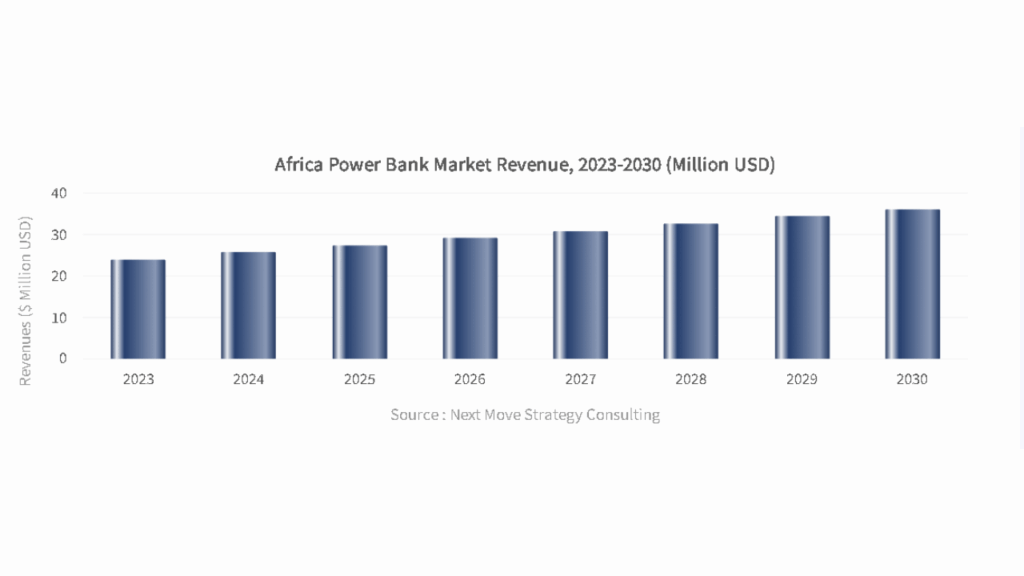
Choosing the right charger or power bank isn’t just about price or brand it’s about compatibility, safety, and performance. Below are the essential things every Kenyan buyer must evaluate:
1. Power Output (Wattage Matters!)
-
Laptops require higher wattage than phones.
-
A typical laptop charger ranges from 45W–100W.
-
For power banks, ensure it has Power Delivery (PD) and at least 65W output for efficient charging.
“I bought a 20,000mAh power bank without checking watts it didn’t even charge my HP once. Useless.” – Comment from Quora Kenya Tech Forum
2. Port Compatibility (USB-C is King)
-
Modern laptops support USB-C charging. Ensure your charger or power bank has USB-C output with PD support.
-
Avoid old micro-USB power banks they’re not ideal for laptops.
-
For older laptops, match your DC pin or barrel connector size.
Pro Tip: Use a USB-C to multi-tip adapter kit if you have multiple laptop brands.
3. Portability & Design
-
For students and professionals moving around Nairobi or campuses like UoN or Strathmore:
-
Choose compact, lightweight models.
-
Bonus: Some power banks double as phone + laptop chargers.
-
4. Safety Features
Look for:
-
Overcharge & overcurrent protection
-
Temperature control
-
Short-circuit prevention
Especially important in areas with power surges (e.g., rural or upcountry locations during storms).
5. Brand & Warranty Support in Kenya
-
Choose brands with local distributor support.
-
Brands like Baseus, Anker, Oraimo, Xiaomi have official or semi-official presence in Nairobi.
-
Avoid shady knockoffs in River Road or online with no return policies.
“Bought a ‘20,000mAh’ no-name bank from Instagram. It died after 2 weeks. No returns, no one to call.” – User from Reddit KE
6. Price vs Performance
-
Don’t overpay for brand hype, but don’t underpay and get fakes.
-
Sweet spot for high-quality laptop power banks in Kenya: KES 6,000–12,000.
-
Chargers range from KES 2,500–8,000 for high-output models.
How Do I Know If a Power Bank or Charger Is Compatible With My Laptop?
Compatibility isn’t guesswork it’s about matching power, ports, and protection. Here’s how to be 100% sure before you spend a shilling:
1. Check Your Laptop’s Wattage Requirement
-
Flip your laptop over and look at the charger rating label or search the model number online.
-
You’ll find something like:
-
Input: 19V – 3.42A = 65W
-
-
That means your laptop needs a minimum 65W charger or power bank with that output.
🔧 Tip: Use the formula: Volts (V) × Amps (A) = Watts (W)
2. Know Your Charging Port Type
There are three main types to watch for:
| Port Type | Used By | Notes |
|---|---|---|
| USB-C PD | Most modern laptops (HP, Dell XPS, MacBook, etc.) | Must support Power Delivery (PD) |
| Barrel/Pin | Older laptops like HP Pavilion, Lenovo ThinkPad | Match voltage + connector tip |
| MagSafe | Apple laptops pre-2016 | Needs original or certified alternative |
If your laptop supports USB-C PD, that’s the best for future-proof compatibility.
3. Match Power Bank Output with Laptop Needs
If your laptop needs 65W, don’t buy a power bank that only outputs 18W or 30W — it won’t charge your device or will do so painfully slow.
Recommended:
-
Baseus Blade 100W (USB-C PD)
-
Anker PowerCore+ 65W
-
Oraimo Traveler Link 70W (new in Kenya)
4. Double Check Power Delivery Support
Not all USB-C ports are equal. Look for:
-
Power Delivery (PD) certified
-
Laptop compatibility listed on specs or box
Many power banks say “20,000mAh” but only support phone-level outputs (5V, 2.1A) — no good for laptops!
5. When in Doubt, Use Online Compatibility Tools
-
Use tools like Baseus compatibility checkers, manufacturer sites, or Reddit laptop groups for confirmation.
-
Visit laptop forums or communities like r/Laptops and Quora Kenya to see what others with your model are using.
Example from Reddit KE:
“I use a Baseus 65W with my Dell Latitude 5490. Works like a charm. Had to make sure it was PD though. Not all USB-C chargers do that.”
Which Is Better for Laptops: 10000mAh or 20000mAh Power Bank?
This isn’t just a numbers game. It’s about watts, ports, and actual performance.
| Capacity | Power Output (W) | Ideal Use Case | Can Fully Charge Laptop? |
|---|---|---|---|
| 10000mAh | Usually 18–30W | Phones, tablets, mini-laptops | ❌ Most laptops need more |
| 20000mAh | 45W – 65W+ | Mid-range to high-performance laptops | ✅ For many models |
| 30000mAh+ | 65W – 100W | Power users, long trips, gaming laptops | ✅✅ Full + extra cycles |
Key Insight: mAh measures capacity, but watts (W) determine charging power. Always check W output first.
So, Which One’s Better?
If you’re serious about charging laptops, 20000mAh is the minimum.
Why?
-
10000mAh won’t deliver enough juice, especially for:
-
Dell Latitude
-
MacBook Air/Pro
-
HP EliteBook/ProBook
-
-
20000mAh power banks with 65W USB-C PD will:
-
Charge your laptop at near wall-socket speeds
-
Handle full laptop recharge once or even twice
-
Also charge your phone or hotspot simultaneously
-
🇰🇪 Locally Recommended in Kenya
-
Oraimo Traveler Link 20000mAh (70W) – Found in major electronics stores, works for most ultrabooks
-
Anker PowerCore III Elite 25600mAh (87W PD) – Imported, but highly rated on Reddit
-
Baseus Adaman 20000mAh (65W PD) – Available on Jumia & Nairobi Computer Market
Avoid generic or unbranded power banks that only say 20000mAh with no mention of output wattage. That’s a red flag!
Real User Insight from Reddit
“Got a 10000mAh Baseus for my ThinkPad — it barely trickled charge. Upgraded to 20000mAh 65W PD and I’m golden now. Lesson learned: go by watts, not capacity.”
How Many Times Can a 20000mAh Power Bank Charge a Laptop?
There’s no one-size-fits-all answer, but we can estimate based on real numbers.
The Formula (Simplified)
To calculate how many full charges a power bank can deliver to a laptop:
Laptop Battery Capacity ÷ Power Bank Usable Capacity = Full Charges
| Laptop | Battery Capacity | 20000mAh (at 3.7V) ≈ 74Wh | Full Charges |
|---|---|---|---|
| MacBook Air M1 | 49.9Wh | 74Wh | ~1.4x |
| HP Pavilion x360 | 50Wh | 74Wh | ~1.4x |
| Dell XPS 13 | 52Wh | 74Wh | ~1.3x |
| Lenovo ThinkPad E14 | 45Wh | 74Wh | ~1.6x |
A quality 20000mAh (65W+) power bank can give you 1–2 full charges depending on your laptop’s battery.
Tip: Factor in conversion loss (15–20%), especially on cheaper power banks.
How Long Does a Laptop Power Bank Last?
1. Per Charge Lifespan
-
As shown above, you can expect 1–2 full charges for most laptops with a 20000mAh bank.
-
If you’re running heavy tasks (video editing, gaming, coding), it’ll deplete faster.
2. Total Life Span (Charging Cycles)
Most good-quality power banks have:
-
300 to 500 full charge cycles
-
That’s 1–2 years of daily usage
-
After that, capacity drops to ~80%
“I’ve used my Anker 20000mAh power bank daily for over a year with no major capacity drop. The trick is not to drain it to zero every time.” – User on Quora
Maintenance Tips
-
Don’t let it stay empty for long
-
Store it in cool, dry places
-
Avoid full 0–100% cycles daily
In the Kenyan Context
With frequent power outages in places like Syokimau, Donholm, and Kitengela, many users rely on 20K mAh power banks to:
-
Work through blackouts
-
Charge on the go via matatus or power stations
-
Share power between phones and laptops
Smart shoppers in Nairobi CBD swear by Baseus and Oraimo — reliable, budget-friendly, and easily available.
Conclusion: Power Up Smart, Stay Ready
Choosing the best laptop chargers and power banks in Kenya isn’t just about voltage and price — it’s about reliability, compatibility, and real-life readiness.
In a market flooded with cheap knock-offs and confusing specs, the key is to:
– Know your laptop’s power needs
– Choose trusted brands with real reviews
– Factor in Kenyan-specific use cases — like power cuts, outdoor work, or campus mobility
– Balance mAh, wattage, and output ports for your lifestyle
Whether you’re a digital nomad in Nairobi, a student in Eldoret, or just someone who hates low-battery anxiety, the right power companion gives you freedom to move, work, and win — unplugged. Power up smart. Stay ready. Always.
Want to find how to improve battery life on your laptop today. Read on.
Frequently Asked Questions (FAQs)
1.Which is better, a 10000mAh or a 20000mAh power bank?
A 20000mAh power bank is better for laptops because it offers more capacity, meaning more charges.
-
A 10000mAh model may struggle to provide a full laptop charge.
-
For real productivity on the go, 20000mAh or more is recommended.
2.How do I choose a power bank for my laptop?
Look for:
-
65W+ output (USB-C PD preferred)
-
Capacity of 20000mAh or higher
-
Compatibility with your laptop’s voltage and port
-
Reputable brands (Anker, Baseus, Oraimo)
3.What powerbank is enough for a laptop?
Minimum: 65W, 20000mAh
Ideal: 100W, 30000mAh for gaming or high-performance laptops.
4.Is it good to charge a laptop with a power bank?
Yes, as long as:
-
The power bank supports your laptop’s charging wattage
-
You’re using quality USB-C to USB-C cables
-
You avoid using low-output power banks
It’s a safe, convenient solution for mobile or blackout-prone environments.
5.How many watts does a power bank need to charge a laptop?
At least 45W, but ideally:
-
65W for ultrabooks or MacBooks
-
100W for gaming or editing laptops
Check your laptop’s original charger to match the wattage.
6.How long does a laptop power bank last?
-
Per charge: 1–2 full charges for 20000mAh
-
Lifespan: 300–500 charge cycles, which is 1–2 years of consistent use
7.Can a 30000mAh power bank charge a laptop?
Yes — and it’s ideal for users needing multiple charges or higher wattage output.
Look for USB-C PD with 100W output to handle larger machines.
8.How many times can a 20000mAh power bank charge a laptop?
Usually 1–1.5 times depending on your laptop’s battery size (see earlier chart). For phones, it can charge 3–5 times.
9.Does charging with a power bank reduce battery life?
Not if you’re using:
-
Quality power banks
-
Appropriate wattage
-
Good cables
Cheap or underpowered devices may cause battery stress, but modern PD-compliant banks are safe.
10.How do I know if my power bank is compatible with my laptop?
Check:
-
Your laptop’s charging port (USB-C, barrel, MagSafe, etc.)
-
Power bank’s output wattage
-
Supported charging protocols (like USB-C PD)
Still unsure? Look up compatibility lists on the manufacturer’s website or ask your seller.
11. What to look at when buying a power bank?
-
Capacity (at least 20000mAh)
-
Output wattage (45W–100W)
-
Ports (USB-C with PD is best)
-
Brand reputation
-
Warranty & safety features (overcharge protection, thermal control)
12. What size power bank do I need for a laptop?
-
Student or business use: 20000mAh, 65W
-
Creative pros or gamers: 30000mAh, 100W+
If portability matters, balance size with performance.
13.How do I know what power cord to buy for my laptop?
-
Match the connector type (USB-C, barrel, MagSafe, etc.)
-
Confirm voltage and amperage printed on your laptop charger
-
Choose OEM or certified third-party cables
14.What are the disadvantages of a power bank?
-
Added bulk and weight (especially >20000mAh)
-
Slower charging if wattage is too low
-
Cheap units may overheat or damage devices
-
Not airplane-friendly above 27000mAh (100Wh) without approval
15.How many watts is good for a laptop charger?
-
Light laptops: 45W–65W
-
Most standard laptops: 65W–90W
-
Gaming/workstations: 100W+
Always check your original adapter specs for accuracy.
16.How do I know if a charger is compatible with my laptop?
Look at:
-
Voltage & amperage output
-
Connector type
-
Whether it’s OEM-certified or manufacturer-approved
Using the wrong charger can damage your battery or motherboard over time.